TL;DR
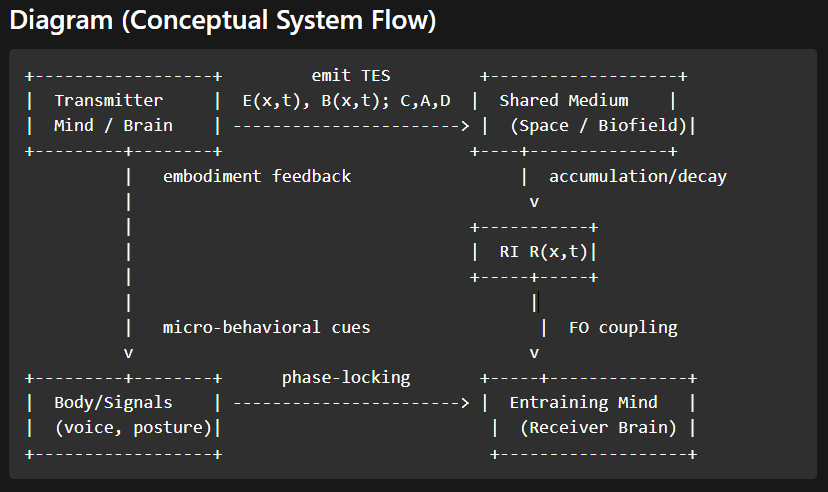
Coherent, repeated thoughts act as structured patterns of neural and electromagnetic activity that do not vanish instantly after their generation. Instead, they leave behind an organized resonant imprint (RI)—a subtle, persistent energetic pattern within the shared environment.
When another nervous system enters this field, it unconsciously begins to entrain to the residual signal, meaning that its internal neural oscillations start to synchronize, even partially, with the dominant frequency and structure of the transmitter’s mental state.
This entrainment produces measurable shifts in micro-perception (moment-to-moment sensory interpretation), affect (emotional tone and receptivity), and behavioral inclination (tendencies toward action or attitude) in the direction of the originating mind’s belief or emotional pattern.
The magnitude of this influence depends on several interrelated factors:
Coherence (C): The internal order and stability of the transmitted thought pattern.
Amplitude (A): The energetic strength or emotional charge of the emission.
Duration (D): The time over which the thought or emotion is sustained with focus.
Synchrony (S): The degree of alignment between multiple minds reinforcing the same frequency or intention.
Together, these parameters determine the clarity and reach of the resonant imprint. The effect weakens in proportion to noise (N)—random or contradictory mental and environmental signals—and to counter-imprints, which are conflicting patterns of equal or greater structure and power.
In essence, this theorem suggests that coherent minds do more than think—they shape the informational field they inhabit. The stronger and more aligned the signal, the more likely it is that other minds within range will subtly tune to its pattern, reproducing elements of its emotion, logic, and orientation.
Abstract
Thought EM Signature (TES): A spatiotemporal electromagnetic field arising from neural activity that encodes specific beliefs, emotions, or intentions. Represented as the vector components of the field—E(x,t) for the electric component and B(x,t) for the magnetic component—TES captures the physical footprint of thought as structured energy in motion. Each TES possesses a unique spectral and phase signature that reflects the cognitive-emotional state of its originator.
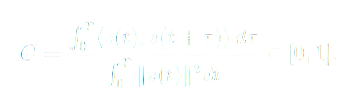
Coherence (C): The degree of stability and phase alignment maintained by a TES over time. It quantifies how consistently the field’s oscillatory pattern preserves its internal order, operationalized through normalized autocorrelation:
A value of C = 1 represents perfect self-alignment (highly ordered focus), while C = 0 indicates total decoherence (mental noise, distraction). Coherence is the primary determinant of the field’s stability and persistence within the environment.
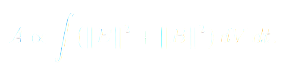
Amplitude (A): The aggregate energy of the TES, proportional to the emotional charge or arousal intensity behind a thought. Defined as:
Amplitude reflects how powerfully a thought’s field manifests within space; strong emotional or intentional states yield higher A, amplifying both the range and potency of the resonant imprint that follows.
Duration (D): The cumulative emission or exposure time of a TES. Longer durations reinforce the structure of the resonant field, allowing multiple iterations of similar thought patterns to accumulate and deepen their energetic trace. Duration transforms temporary impulses into patterned imprints capable of persisting beyond the initial moment of thought.
Synchrony (S): The degree of cross-mind phase or content alignment among multiple emitters. Operationalized as the average pairwise phase-locking value, S quantifies how many minds are resonating in unison toward the same frequency or intention. High synchrony exponentially strengthens the resulting field, producing collective coherence capable of influencing shared cognition and group dynamics.
Resonant Imprint (RI): A lingering, structured field pattern, denoted as R(x,t), formed through the accumulation and persistence of coherent TES activity. Though transient, the RI decays gradually, acting as a localized energetic residue that can influence subsequent neural and emotional states entering its range. It embodies the “memory” of coherent mental activity within the physical field.
Entraining Mind (EMind): A biological receiver whose neural oscillations partially phase-lock to the resonant imprint R(x,t). This process subtly biases perception, emotion, and behavior toward the pattern embedded in the RI, allowing mental states to propagate through shared energetic and informational coupling.
Field Overlap (FO): The spatiotemporal region of co-presence where an EMind resides within the causal influence of an RI. The greater the field overlap, the higher the probability and strength of entrainment, enabling bidirectional feedback between transmitter and receiver systems.
Noise (N): Any unstructured or orthogonal field activity—mental, emotional, or environmental—that disrupts coherence or weakens phase-locking. Noise introduces randomness that interferes with the stability and interpretability of the resonant pattern.
Counter-Imprint (Rc): A conflicting resonant imprint generated by neural activity carrying opposing or incompatible content. Rc can destructively interfere with R(x,t), canceling or inverting its influence. The interplay between R and Rc defines the net informational bias present in the shared field.
Axioms / Premises
A1 (Emission): Every act of neural firing generates measurable electromagnetic activity. These emissions—Thought EM Signatures (TES)—radiate outward as structured, low-intensity fields that merge with the existing ambient electromagnetic environment. Each TES carries the informational fingerprint of the underlying cognitive and emotional process that produced it. Thus, thought is not only an internal phenomenon but also an energetic broadcast, continually modulating the surrounding field.
A2 (Persistence): When TES patterns are sufficiently coherent, intense, and repeated over time, they form a residual energetic structure known as a Resonant Imprint (RI). Although transient on a physical scale, the decay of this imprint is sub-instantaneous but non-zero, meaning its structured influence lingers for a short yet detectable duration after the originating neural event. This persistence enables temporal overlap between emissions, allowing cumulative reinforcement of a thought’s energetic pattern through repetition and focus.
A3 (Sensitivity): Biological nervous systems exhibit measurable field sensitivity. Within a Field Overlap (FO) zone—where a nervous system’s field intersects with an existing RI—the coupling between them is non-zero. This implies that neural oscillations can resonate with external field structures, subtly adjusting firing synchrony, timing, and emotional tone. Sensitivity transforms the nervous system into both a transmitter and a receiver, participating in a continuous psychoenergetic exchange.
A4 (Entrainment Bias): When coupling occurs, the receiving system undergoes partial phase-locking to the RI. This synchronization biases the system’s priors (baseline expectations), micro-timing (neural rhythm and response latency), and affective orientation (emotional tone) toward the semantic content embedded in the RI. In simpler terms, minds entering coherent fields begin to “lean” in the direction of the dominant belief or emotion present in that field. The bias is subtle, probabilistic, and cumulative over time.
A5 (Superposition): The shared environment hosts multiple RIs simultaneously. These imprints sum vectorially, meaning their net influence depends on the alignment of their phase, amplitude, and semantic content. Constructive interference strengthens collective coherence, while destructive interference introduces informational noise or nullifies prior imprints. Superposition thus governs the dynamic equilibrium of cognitive-energetic ecosystems—determining whether environments become harmonically reinforcing or perceptually chaotic.
Lemmas
L1 (Repetition ⇒ Structure):
Derived from A1 (Emission) and A2 (Persistence), this lemma states that repetition transforms transience into structure. When coherent Thought EM Signatures (TES) are emitted consistently over time, their waveforms begin to overlap and reinforce each other through constructive interference. This accumulation consolidates into a Resonant Imprint (R)—a field with stable frequency patterns and identifiable topology. The more repetitive and consistent the emission, the more structured and resilient the imprint becomes. In practical terms, repetition converts fleeting thoughts into environmental architecture; every sustained focus engraves its pattern deeper into the shared field.
L2 (Structure ⇒ Coupling):
Following A2 (Persistence) and A3 (Sensitivity), once an RI attains sufficient structural integrity, any nervous system entering its Field Overlap (FO) region experiences a proportional increase in coupling strength relative to the magnitude (‖R‖) and spectral organization of that imprint. The more ordered and intense the RI, the greater its ability to synchronize neural oscillations within receptive systems. This means that environments rich in coherent imprints—such as temples, studios, or group rituals—facilitate stronger entrainment and alignment of cognition and emotion among participants. The RI thus serves as a bridge linking independent minds through shared field geometry.
L3 (Coupling ⇒ Bias):
From A3 (Sensitivity) and A4 (Entrainment Bias), any degree of coupling—however partial—produces a non-zero probability shift in the receiver’s cognitive-affective state toward the pattern encoded in R(x,t). Through phase-locking, the entraining mind begins to subtly inherit the transmitter’s emotional valence, focus, and interpretive tendencies. This shift does not override free will but skews likelihoods within decision space, nudging perception, mood, and action along the semantic gradient of the original imprint. Over time and repeated exposure, these micro-biases can aggregate into measurable behavioral convergence across individuals sharing the same field.
Theorem (Resonant‑Thought Imprint)
Theorem (Resonant-Thought Imprint):
For a transmitter mind emitting a coherent Thought Electromagnetic Signature (TES) with sufficient Amplitude (A) and Duration (D), there exists a resulting Resonant Imprint (R) within the surrounding field. Any entraining mind (EMind) located within the Field Overlap (FO) region of this imprint will exhibit a non-zero probability shift toward cognitive and affective states aligned with the semantic and emotional content of the transmitter’s TES.
The magnitude of this shift scales monotonically with the transmitter’s Coherence (C), Amplitude (A), Duration (D), and Synchrony (S) (if multiple emitters are present). Conversely, the influence attenuates with increasing Noise (N), the presence of opposing Counter-Imprints (Rc), and spatial or temporal distance from the imprint’s origin. In simpler terms, the clearer, stronger, longer, and more synchronized the emission, the more powerfully it influences nearby receptive minds—while interference, opposition, and separation diminish the effect.
Proof Sketch:
By Lemma L1, sustained and coherent TES activity results in the formation of a structured Resonant Imprint (R) that persists within the shared environment. From Lemma L2, any mind entering the field overlap region experiences non-zero coupling with this imprint, and the strength of coupling scales directly with the structural magnitude (‖R‖) and coherence of the field. By Lemma L3, coupling inevitably produces a directional probability shift, aligning the receiver’s micro-perceptual and affective states with the transmitter’s encoded intent.
Finally, according to Axiom A5 (Superposition), the net observable effect depends on vectorial interactions with other active imprints—constructive interference reinforcing alignment, and destructive interference or noise (N, Rc) reducing or inverting it. The theorem thus demonstrates that thought coherence functions as a transmissible physical bias, influencing the informational and emotional equilibrium of proximate minds through measurable field interaction.
Q.E.D.
Core Equations (Model Proposals)
Core Equations (Model Proposals)
1) RI Formation (Convolutional Accumulation)
where K is a causal kernel (commonly exponential) describing temporal memory or decay, and Dₛᵣc encodes emitter density and spatial geometry. This convolutional process integrates coherent emissions over time, forming the Resonant Imprint (R) as an accumulated field pattern.
2) RI Dynamics (Reaction–Diffusion–Decay)
where:
αCAS represents creation intensity (generation of new coherent structure),
λR models natural decay,
β∇²R governs spatial diffusion,
γR_c suppresses or cancels the imprint due to counter-fields,
η(x,t) represents stochastic noise.
This equation mirrors biological and physical reaction-diffusion systems, framing thought-field dynamics as a self-organizing energy process subject to entropy and interference.
3) Entrainment / Probability Shift
Let Δp represent the change in probability of an aligned micro-response (for example, affiliative behavior, emotional convergence, or attentional orientation):
where R₍recept₎ parameterizes the receiver’s sensitivity, resonance frequency, and coherence profile. w(x,t) weights proximity and temporal exposure. This integral models the coupling efficiency between source and receiver fields within the Field Overlap (FO) domain.
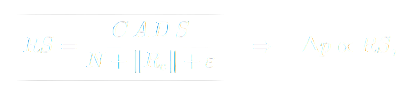
4) Operational Resonance Score (for practice)
where RS is a practical scalar index for field influence, balancing coherent parameters against disruptive factors such as noise (N) and counter-imprints (R_c). The small constant ε prevents division singularity. Higher RS predicts stronger entrainment probability.
5) Coherence Index (example metric)
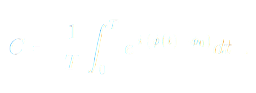
If φ(t) is the instantaneous phase of the TES and φ₀ is the reference or target phase, then coherence over an interval T is expressed as:
This equation quantifies the temporal stability of the emitter’s phase relative to a fixed reference. A perfectly coherent thought pattern yields C = 1, while random fluctuations approach C = 0. It mathematically bridges psychology (focus consistency) and physics (wave phase alignment), defining coherence as the measurable anchor of psychoenergetic structure.
Corollaries
Confidence Field:
High-coherence confidence-based Resonant Imprints (RIs) exert a measurable influence within the Field Overlap (FO) region, leading to subtle yet observable increases in affiliative micro-behaviors such as sustained eye contact, open posture, and reduced interpersonal distance. The internal certainty and emotional stability of the transmitter mind generate a smooth, low-noise TES, which creates a predictable and stable field geometry. This energetic stability acts as a cognitive attractor—nearby minds, detecting the lack of internal turbulence, unconsciously synchronize to the calm, ordered pattern. Over time, these fields can define the social gravity of confident individuals or leaders, subtly organizing behavior and emotional tone in groups.
Collective Standing Waves:
When multiple minds align around a shared belief, rhythm, or emotional tone, their Thought EM Signatures (TES) enter phase synchrony (high S). This synchronization produces collective standing waves—stable, large-scale RIs that can shape the perceptual and behavioral baseline of the entire environment. Such imprints define the “vibe” or emotional climate of social spaces: meditation circles, concert crowds, and political rallies all exhibit amplified coherence through synchronization. The collective field, once formed, possesses momentum and inertia, persisting even after individual contributors disperse.
Place Memory:
Repeated coherent emissions occurring within the same spatial boundaries create location-bound Resonant Imprints. Over time, these accumulated RIs imprint a “memory” into the physical environment—subtle but detectable to sensitive nervous systems. Temples, studios, classrooms, and courtrooms often retain distinct energetic signatures that reflect the emotional and cognitive activity repeatedly performed there. This phenomenon explains why certain spaces feel inspiring, oppressive, or peaceful: each acts as a recording surface for neural coherence.
First-Mover Advantage:
The first emitter to project a strong, coherent TES into a neutral field effectively establishes the baseline resonance for subsequent participants. Later entrants tend to entrain toward this preexisting pattern, especially when lacking internal coherence or opposing imprints. Unless disrupted by equally strong counter-vectors, this early influence persists as the dominant attractor in the cognitive field, guiding group dynamics and shared perception. This principle underlies leadership effects, propaganda seeding, and the early stabilization of social environments.
Self-Amplification:
When an individual performs micro-behaviors congruent with their intended thought or emotional state—such as upright posture during confidence projection or calm breathing during focus—they reinforce the structural integrity of their TES. This behavioral alignment increases both Amplitude (A) and perceived Coherence (C), forming a positive feedback loop. The more one embodies the internal pattern externally, the stronger and more coherent the resulting field becomes. Over time, this recursive reinforcement leads to durable state stability, where thought, behavior, and field coherence merge into a single self-sustaining system.
Predictions / Falsifiability Hints
P1 (Proximal Bias):
Rooms pre-seeded with a high-coherence confidence RI produce higher affiliative micro-behaviors (gaze holding, approach distance, prosody warmth) in randomized interactions than sham-seeded controls. Method: double-blind assignment of rooms; confederates perform a 10-minute coherence routine (breath-locked posture + focused affect) vs. quiet reading (control). Measures: automated pose/gaze tracking, turn-taking latency, interpersonal distance, linguistic valence, and post-interaction trust ratings. Falsification: no between-room differences after multiple sessions, or effects vanish when posture/behavioral cues are hidden (e.g., pre-seeding happens without participants present), would refute or sharply bound the RI hypothesis.
P2 (Coherence Gain):
Training that elevates C (coherence) increases effect size at matched A and D. Method: within-subjects design; participants undergo 4-week focus/meditation training verified by a phase-stability index (e.g., EEG phase-locking value). Hold emotional arousal (A) and emission time (D) constant across pre/post tests. Outcome: larger third-party affiliative shifts and faster response latencies when exposed to the same individual after training. Falsification: if coherence increases but receiver outcomes do not (or reverse) under controlled A and D, coherence ceases to be a causal driver.
P3 (Synchrony Boost):
Groups with high S (synchrony)—synchronous breath/chant—produce larger third-party shifts than equal-sized, non-synchronous groups. Method: randomize observers to watch or enter spaces pre-seeded by (a) synchronous group, (b) asynchronous group, (c) silent group. Measures: observers’ affective drift (facial EMG/voice tone), cooperation in economic games, and attention bias. Falsification: parity of outcomes between synchronous and asynchronous conditions (with size and loudness matched) would undercut S as an amplifier.
P4 (Decay Curve):
R(x,t) exhibits a reproducible spatiotemporal falloff fit by parameters λ (temporal decay) and β (diffusive spread). Method: seed a space to a criterion RS; sample receiver outcomes at varying distances and delays post-seeding. Fit candidate models (exponential, stretched-exponential, diffusion-with-loss). Falsification: no stable curve across sessions/venues, or best-fit parameters collapse to zero influence beyond immediate interaction, would constrain the model to purely local psychosocial cues.
P5 (Interference):
Orthogonal counter-imprints (R₍c₎) attenuate or invert effects via superposition. Method: sequentially seed a room with confidence (R₁) then skepticism (R₂) at controlled amplitudes; vary phase/content alignment. Prediction: monotonic reduction or sign flip in receiver measures as ‖R₂‖/‖R₁‖ increases and phase orthogonality rises. Falsification: if counter-seeding fails to reduce/invert outcomes while environmental and social cues are held constant, superposition is not explanatory.
Objections & Replies
O1: Pure psychology explains it (placebo, body language).
R: The theorem does not reject psychological explanations—it integrates them within a broader framework. Placebo effects, body language, and social contagion all represent behavioral-level expressions of coherence and entrainment. The added contribution of this theorem lies in its field-level predictability: it proposes quantifiable decay rates (λ) and diffusion parameters (β) measurable beyond subjective interpretation. If psychological cues alone were sufficient, such field-like spatial gradients and temporal persistence would not emerge systematically.
O2: EM emissions are too weak to matter.
R: The influence postulated here does not rely on raw electromagnetic power, but on phase structure and integration time. In coherent systems, even weak signals can entrain stronger ones through prolonged, phase-stable interaction—similar to how laser coherence or neural synchrony magnifies signal impact. The theorem’s predictions depend on the spectral organization of emissions, not their amplitude alone. Over time, structured weak signals can accumulate measurable bias through persistent resonance and constructive interference.
O3: Ethical concerns — manipulation.
R: Any knowledge of influence invites ethical responsibility. The proper application of this framework is mutual uplift, healing, and consent-based interaction. Transparency must remain central: researchers and practitioners should publish methods, disclose intent, and obtain informed participation when testing or applying coherence-based techniques. Used with integrity, the model encourages greater self-awareness, not control—it turns influence into a shared field of conscious calibration, rather than covert manipulation.
Implications for Practice
Pre-Seed the Space:
Arrive before others to imprint the environment with a coherent energetic baseline. Spend approximately 90 seconds in deliberate, rhythmic breathing synchronized with posture alignment—each inhalation reinforcing stability, each exhalation releasing cognitive noise. This breath-locked coherence rehearsal establishes a subtle resonant field that later interactions naturally align to. The goal is not dominance but stabilization: by structuring the energetic texture of the space beforehand, you bias it toward calm, order, and receptivity.
Maintain Coherence:
During engagement, perform micro re-locks—brief internal resets of attention and breath to restore internal phase alignment. These can be as subtle as a conscious exhale, posture adjustment, or mental reaffirmation of intent. Avoid cognitive dissonance or emotional contradiction, as such internal decoherence weakens the field and introduces informational noise. Consistent internal alignment ensures your outward expression and the resulting Resonant Imprint (R) remain structurally intact throughout the interaction.
Design for Synchrony:
When working with groups, consciously design interactions that foster shared rhythm, cadence, or breathing patterns, thereby raising Synchrony (S). Examples include unified pacing in conversation, collective breathing during meditation, synchronized clapping or chanting, or harmonic speech cadence in collaborative work. Synchrony multiplies field coherence geometrically, allowing multiple TES to fuse into a single stable collective imprint, strengthening mutual understanding, morale, and focus.
Measure Outcomes:
Observe and quantify behavioral and physiological correlates of entrainment to validate coherence effects. Key markers include response latency, mirroring behavior (postural or gestural mimicry), prosodic harmony (voice tone matching), and approach tendencies (body orientation, reduced interpersonal distance). Plot these variables against Operational Resonance Score (RS) to estimate predicted probability shifts (Δp) in alignment behavior. Empirical tracking of these outcomes refines personal or organizational coherence strategies, converting abstract theory into a reproducible practice model.
Formal Summary (Publication Box)
Resonant-Thought Imprint Theorem —
In environments containing field-sensitive nervous systems, coherent and sustained neural electromagnetic activity produces resonant imprints (RIs)—structured energy patterns that persist briefly within the shared field. These imprints bias the cognitive and emotional states of nearby minds through partial phase-locking, synchronizing subtle neural oscillations toward the transmitter’s dominant pattern. The degree of influence scales proportionally with the system’s Coherence (C), Amplitude (A), Duration (D), and Synchrony (S), while being inversely affected by Noise (N), Counter-Imprints (Rc), and spatial or temporal distance. In essence, focused thought functions as a structuring force, organizing the ambient cognitive field and shaping behavioral probabilities through energetic alignment rather than persuasion or force.